
You’ve just invested in a brighter, whiter smile. The results are stunning, and you can’t help but show them off. But as the morning rolls around, a familiar question arises for millions: what about my coffee? That rich, aromatic cup is a non-negotiable part of your daily routine. This leads to the critical concern for anyone fresh from a whitening procedure: How long after teeth whitening can I drink coffee?
It can be difficult to navigate the post-whitening care environment. You want to return to your regular life, but you also want to preserve your new smile. The good news is that you don’t have to give up coffee forever. However, timing is everything. This comprehensive guide will walk you through exactly when you can reintroduce coffee, why the waiting period is so important, and how you can enjoy your favorite beverage without compromising your whitening results.
Why Your Teeth Are So Vulnerable After Whitening
To understand the rules of post-whitening care, you first need to understand what happens to your teeth during the whitening process itself. Whether you opt for an in-office treatment or use an at-home kit, the fundamental science is the same. Whitening products use active ingredients like hydrogen peroxide or carbamide peroxide to achieve their results.
These agents work by penetrating the outer layer of your tooth, the enamel, and breaking down the complex molecules that cause stains. This process is incredibly effective at lifting years of discoloration from coffee, tea, wine, and other sources. However, it also temporarily changes the structure of your enamel.
During a whitening treatment, the process that lifts stains also removes the protective protein layer on your teeth, known as the pellicle. This layer naturally reforms with help from your saliva, but it takes time. More importantly, the whitening process opens up microscopic pores, or “tubules,” in your enamel. This makes your teeth temporarily more porous and, therefore, highly susceptible to absorbing new stains. Think of your freshly whitened teeth like a sponge, ready to soak up any color they come into contact with. This heightened porosity is the primary reason for the strict aftercare instructions your dentist provides.
The 48-Hour Rule: The Critical Waiting Period
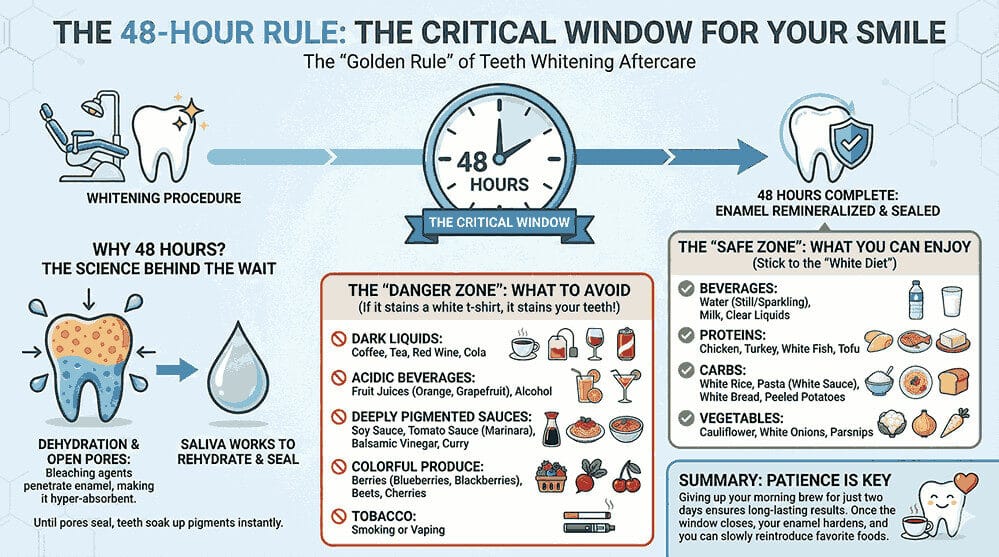
Ask any dental professional, and you will likely hear the same advice: wait at least 48 hours after your teeth whitening procedure before drinking coffee. This 48-hour window is not an arbitrary number. It is the crucial timeframe during which your teeth are at their most vulnerable.
During these first two days, your enamel is working hard to remineralize and rebuild its natural defenses. The microscopic tubules that were opened during the whitening process begin to close, and the protective pellicle layer starts to reform. Introducing dark, pigment-rich liquids like coffee during this period is like painting on a fresh canvas you just cleaned. The dark pigments, known as chromogens, and the acidic nature of coffee can easily penetrate the porous enamel, leading to new, deep-set stains that can be even harder to remove than the original ones.
Essentially, drinking coffee too soon can undo the very results you just paid for and spent time achieving. Adhering to this 48-hour rule is the single most effective thing you can do to protect your investment and ensure your whitening results are long-lasting and brilliant.
What About At-Home Whitening Kits?
The 48-hour rule generally applies to professional, in-office whitening treatments, which use a higher concentration of bleaching agents. But what if you’re using at-home whitening strips, trays, or pens?
The principle remains the same. While at-home kits often use a lower concentration of peroxide, they still make your enamel temporarily porous. For this reason, it is wise to avoid coffee for at least a few hours after each application. For a full whitening course that spans several days or weeks, the best practice is to avoid coffee and other staining agents for the entire duration of the treatment, plus an additional 48 hours after your final application. This ensures you get the maximum benefit from the whitening process without inadvertently re-staining your teeth along the way.
If you’re using whitening strips, it’s important to know their potential effects. Find out if whitening strips are bad for your teeth.
The Science of Stains: Why Coffee is a Major Culprit
Coffee is a triple threat to a white smile. Its staining power comes from a combination of three key factors: chromogens, tannins, and acid.
- Chromogens: These are highly pigmented compounds that stick to your tooth enamel. They are the primary source of the dark color in coffee. Because your enamel is porous after whitening, these chromogens can easily latch onto and seep into your teeth, causing immediate discoloration.
- Tannins: Coffee is also rich in tannins, a type of plant-based compound. Tannins not only have their own color but also boost the ability of chromogens to stick to your teeth. This makes the staining process more efficient and the discoloration more pronounced.
- Acid: Coffee is an acidic beverage. Acids can soften and erode tooth enamel over time, making it rougher and even more susceptible to staining. A weakened enamel surface provides more places for pigments to hide and accumulate, leading to a dull, yellowed appearance.
This powerful combination makes coffee one of the most significant dietary challenges to maintaining a bright smile. Understanding these factors helps clarify why avoiding it immediately after whitening is so critical.
Strategies for Reintroducing Coffee After the Waiting Period
You’ve patiently waited 48 hours (or longer), and you’re ready to welcome coffee back into your life. But this doesn’t mean you should go back to your old habits without a second thought. To protect your results and keep your smile bright for months or even years to come, you need a smart coffee-drinking strategy. Here are some of the best practices for coffee drinkers who want to maintain their pearly whites.
“Did you know that vaping can also contribute to teeth discoloration? Learn more about how vaping affects your teeth.“
1. Drink Through a Straw
This is one of the simplest yet most effective tips. Drinking coffee, especially iced coffee or cold brew, through a straw minimizes the liquid’s contact with the front surfaces of your teeth. By directing the coffee toward the back of your mouth, you bypass the most visible teeth and significantly reduce their exposure to staining pigments. While it might feel odd to drink hot coffee this way, it’s a habit worth adopting for the sake of your smile.
2. Don’t Sip All Day
The frequency of exposure matters just as much as the beverage itself. Sipping on a cup of coffee for hours on end creates a prolonged acid attack on your enamel and constantly exposes your teeth to staining compounds. Instead of nursing a single cup all morning, try to drink your coffee within a shorter timeframe, such as 20-30 minutes. This limits the duration of the staining and acid exposure, giving your saliva a chance to do its job of neutralizing the acid and rinsing away pigments.
3. Rinse with Water Immediately After
After you finish your coffee, make it a habit to swish your mouth with plain water. This simple action helps rinse away the lingering coffee pigments and neutralizes the acid on your teeth before they have a chance to set in. You don’t need mouthwash—just a quick rinse with water can make a significant difference in preventing surface stains from forming.
4. Wait Before You Brush
It may sound counterintuitive, but you should not brush your teeth immediately after drinking coffee. Because coffee is acidic, it temporarily softens your tooth enamel. Brushing while the enamel is in this softened state can cause abrasion and wear it down, leading to enamel erosion and increased sensitivity. Instead, rinse with water and wait at least 30 to 60 minutes before brushing. This gives your saliva enough time to neutralize the acid and for your enamel to remineralize and harden.
5. Add Milk or Cream
If you enjoy your coffee with milk, you’re in luck. Adding milk or a plant-based creamer can help reduce coffee’s staining potential. The proteins in milk, particularly casein, can bind to the tannins in coffee, preventing them from attaching to your teeth. Lighter-colored coffee is also less likely to cause severe staining than black coffee. So, a latte or a cappuccino is a better choice for your smile than a straight espresso or black Americano.
6. Opt for Lighter Roasts or Cold Brew
While the evidence is not definitive, some believe that lighter roasts may be slightly less staining than dark roasts. More significantly, cold brew coffee is often cited as being less acidic than its hot-brewed counterpart. A lower acid content means less potential for enamel erosion, which can help reduce staining over the long term. If you’re a coffee lover, experimenting with different roasts and brewing methods could be beneficial for your oral health.
The “White Diet”: What Else to Avoid After Whitening
Coffee is the main focus, but it’s not the only thing you need to be cautious about after a teeth whitening treatment. During that critical 48-hour period, you should follow what is commonly known as the “white diet.” The rule of thumb is simple: if it can stain a white shirt, it can stain your teeth.
According to the American Dental Association, enamel is temporarily porous after whitening.
Here is a list of foods and beverages to avoid for at least two days post-whitening:
- Dark Beverages: Tea (especially black tea), red wine, dark sodas, and colored fruit juices.
- Colorful Sauces: Soy sauce, tomato sauce, curry, balsamic vinegar, and mustard.
- Pigmented Fruits and Vegetables: Berries (strawberries, blueberries, raspberries), beets, dark leafy greens like spinach, and carrots.
- Colored Candies and Snacks: Chocolate, colored candies, and artificially colored snack foods like cheese puffs.
- Tobacco Products: Smoking and chewing tobacco are major sources of tooth discoloration and should be avoided entirely, especially after whitening.
Instead, focus on light-colored or “white” foods that won’t compromise your results. Good options include:
- Chicken and turkey (without dark marinades)
- White fish
- White rice, pasta, and bread
- Potatoes (peeled)
- Cauliflower
- Bananas
- Yogurt (plain)
- Water and milk
Following this diet diligently for 48 hours gives your teeth the best possible chance to stabilize and resist future stains.
Long-Term Maintenance for a Lasting Bright Smile
Teeth whitening is not a permanent solution. Your teeth will naturally begin to accumulate new stains over time, influenced by your diet and lifestyle. However, with proper care and maintenance, you can extend the life of your whitening results significantly.
Excellent Oral Hygiene
The foundation of a bright smile is a solid oral hygiene routine. This means:
- Brushing Twice a Day: Use a soft-bristled toothbrush and a whitening toothpaste that contains gentle abrasives and chemical agents to polish away surface stains. Look for products with the American Dental Association (ADA) Seal of Acceptance.
- Flossing Daily: Flossing removes plaque and food particles from between your teeth, where stains often accumulate and a toothbrush can’t reach.
- Using a Whitening Mouthwash: Some mouthwashes are formulated to help prevent new stains from forming and can be a great addition to your routine.
Touch-Up Treatments
To keep your smile at its peak brightness, you will likely need periodic touch-up treatments. The frequency depends on your habits and the type of whitening you initially received.
- At-Home Kits: If you use whitening strips or trays, you might do a touch-up session for a few days every 3 to 6 months.
- In-Office Whitening: For professional treatments, your dentist might recommend a follow-up appointment once a year or provide you with a custom take-home tray for periodic maintenance.
Regular Dental Cleanings
Don’t underestimate the power of a professional cleaning. Your dental hygienist uses specialized tools to remove surface stains and polish your teeth, which can dramatically improve their appearance. Regular checkups every six months are essential for removing plaque and tartar buildup and for catching any oral health issues early.
The Final Verdict on Coffee After Teeth Whitening
So, how long after teeth whitening can you drink coffee? The safest and most recommended answer is to wait a minimum of 48 hours. This critical period allows your tooth enamel to remineralize and become less porous, significantly reducing the risk of immediate re-staining.
Once you’ve passed that window, you can reintroduce coffee, but with a new, smarter approach. By drinking through a straw, limiting your consumption time, rinsing with water afterward, and maintaining excellent oral hygiene, you can enjoy your daily cup without sabotaging your beautiful, bright smile. A little patience and a few new habits are a small price to pay for long-lasting, confidence-boosting whitening results. Your smile is worth it.
Frequently Asked Questions(FAQs)
Can I drink coffee with a whitening treatment that has clear aligners?
If you are using a whitening gel inside orthodontic clear aligners, you should absolutely not drink coffee while wearing them. The aligners will trap the coffee against your teeth, leading to prolonged exposure and almost certain staining. Always remove your aligners to eat or drink anything other than water.
What are some good coffee alternatives after whitening?
During the 48-hour waiting period, stick to water. After that, if you want a warm beverage, consider white tea or some herbal teas that are light in color, like chamomile or peppermint. Be cautious with green tea, as it can still cause some staining over time.
Does using a whitening toothpaste actually help after a treatment?
Yes, a good whitening toothpaste is an excellent tool for maintenance. These toothpastes are designed to remove extrinsic (surface) stains, not to change the intrinsic color of your teeth like a bleaching treatment does. By using one daily, you can polish away the daily accumulation of pigments from coffee and other foods, helping to maintain the results of your professional whitening.
Is tooth sensitivity after whitening normal?
Yes, temporary tooth sensitivity is a common side effect of teeth whitening. The peroxide can irritate the nerve of the tooth, causing sensitivity to hot and cold temperatures. This usually subsides within a day or two. Using a toothpaste designed for sensitive teeth, which often contains potassium nitrate or stannous fluoride, can help manage any discomfort.